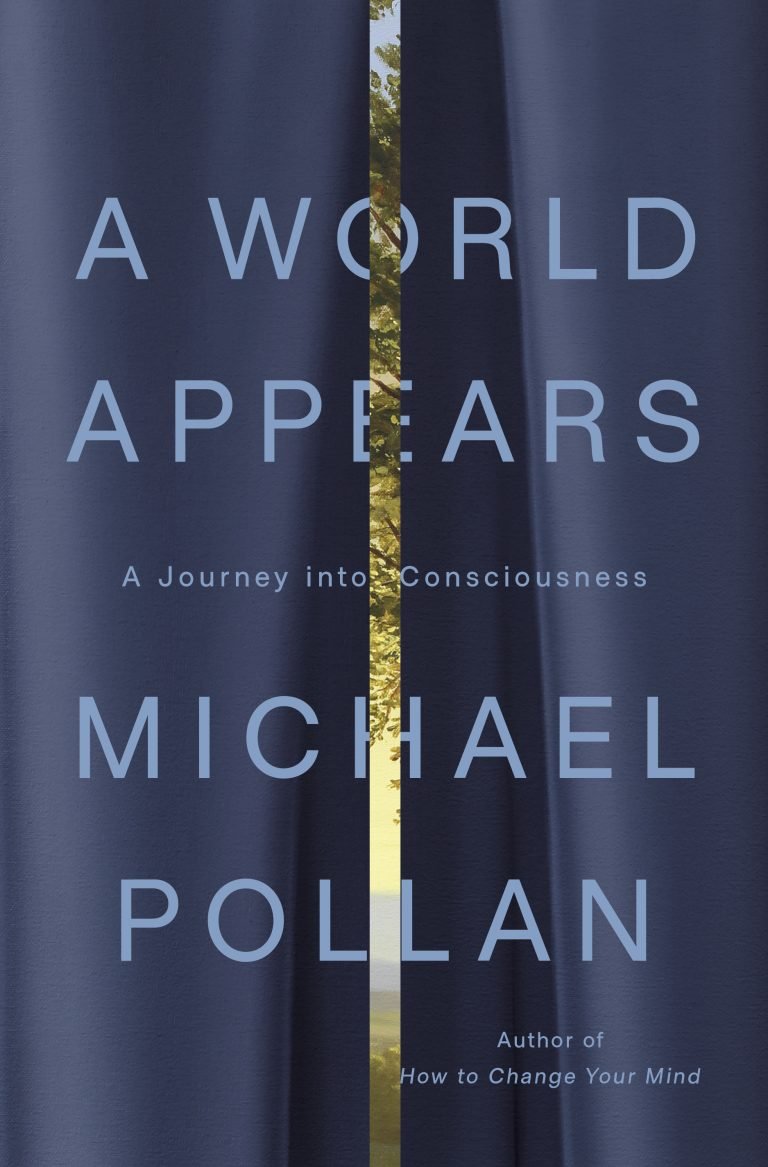
A World Appears
Reading Progress
30%
A traveler’s log across the landscape of curiosity: examining the algorithms of thought, the chemistry of life, and the fabric of the stars.
The Log
English translation and analysis of Sleepy's investigation into the $48B Southeast Asian data-center credit plumbing behind ByteDance, Alibaba, and Tencent's overseas Nvidia compute.
Anthropic's 1.3B IPO and GTA VI's .79B launch landed in the same week. Slow deletion buys shared human craft, while solo and small studios still need efficiency to afford that iteration.
A controlled ARC-AGI-3 study across 27 lineages finds frontier models can build initial harnesses, yet autonomous self-revision adds only 2.80 held-out RHAE points and regresses on 12 lineages without gating.
A deep walkthrough of Garicano, Li, and Wu's Messy Jobs and Thomas Wolf's 15 visual cards, from Nordhaus light data and radiology bundles to workslop, hiring signals, and Baumol growth bottlenecks.
Viral X posts citing Scott Aaronson rest on a game of telephone he has disavowed, while the three real November 2026 factoring papers do not threaten modern RSA-2048 keys.
A Stanford, Berkeley, NVIDIA, and Northwestern study grades LLM agent teams at equal completion-token budget, finding debate on shared facts stays at majority vote while split-fact forwarding and gated recursion climb higher.
1Password customer vaults stayed isolated, yet the November 25 disclosure leaves root-cause gaps, no IOCs, and two real risks around targeted phishing and exposed backend source code.
Anthropic cut API CPU per request by about 70 percent and median time to first token by about 20 percent; the post focuses on verification loops rather than writing Rust.
Bloomberg reports lenders are delaying or stepping back from four Asian data center loans linked to ByteDance, Alibaba, and Tencent after 15 CFR 744.24 took effect on November 19.
A 24,252-byte pure x86-64 assembly OS boots Qwen3-0.6B from RAM in under 100 ms and beats llama.cpp on CPU decode by up to 54 percent. Here is how its boot path and AVX2 kernels work, and what a 2B build needs on a home PC without a GPU.
A November 2026 Harvard job market paper tracks 445 million work events across 655 firms and 720,542 workers. AI coding agents raised pull requests opened by 35.7 percent, left engineering headcount unchanged, and pushed code review times up 56.1 percent.
Critics of the 2019 black-hole photograph showed the ring was not hard to get: even a point source could be made to wear one. Four CSIRO researchers re-imaged the same public data with quantities no station error can touch, after proving the machine does not stamp rings on jets. The crescent came back 42.2 against 42 micro-arcseconds.
Anthropic's post on agent memory tells what happens when a model trusts its own wrong note: three loops around a mountain it never passes. The fix is boring, and that is the finding. Re-read the transcripts offline, keep the injected index to 200 lines, quote verbatim instead of summarizing.
A new MNRAS paper maps Galactic civilizations as a network. Our own odds of contact barely move with where the habitable zone sits, but where it sits decides something larger: whether our silence stays an unlucky address or becomes something closer to evidence about the whole Galaxy.
A Rutgers headline promises quantum computers that correct their own mistakes. The Nature Physics paper beneath it says "signpost on the route towards fault tolerance": a chain of 100 superconducting qubits held its chaos down, thousands of times, without correcting a single error.
The machines took the transcription. What is left is deciding what matters, feeling when something is off, and standing behind the difference in public. A fighter jet in a browser tab, and why the AI era asks us to be even more human.
Fab executives say on the record that quantum chips help none of the metrics their factories run on. The money funding the work anyway is conviction money: billions in subsidies and vertical integration against a $1.4 billion market. The layer nobody has bought yet is cryogenic test, and the qualification for it is neutrality.
Eigen Labs runs a leaderboard where every quantum-circuit score carries a machine-checked Lean proof. The proofs cover a stripped-down world of bits and one sign. The builders state exactly which span is missing: the lift to full quantum states.
OpenAI's October kernel scan reproduced 1,724 vulnerabilities and produced 948 local privilege-escalation exploits. A person reviews the exploit and the patch before a report goes out. Ten days in, 61 were already patched in the kernel.
RAG cuts documents into fixed-length chunks that never existed in the source. A paper from IBM retrieves whole sections by reading the table of contents instead, and the idea takes about twenty lines to copy.
WIRED reports that an Accenture contractor gave a personal Claude Code agent login credentials to a secure Pentagon system on NIPRNet, that it ran for two months, and that it appears to have sent credentials and a network map to a third-party site.
Jason Palmer's 2017 Economist survey bet on quantum timing, gravity sensors, magnetometers, key distribution and computers. Nine years on, the sensor bets are catalogue parts, the cryptography migrated to software, computing has demonstrations but no useful machine, and governments are taking equity.
A 2019 engineering guide to superconducting qubits said some of the immediate concerns for scaling had been addressed, and called a logical qubit outliving its physical qubits an outstanding challenge. Willow met that challenge in 2024. The scaling claim has aged worse, with a 2026 three-dimensional stack still two and a half points short on two-qubit fidelity.
The 2019 trapped-ion review put three scaling architectures on the table and quoted a 99.9 percent two-qubit gate record. Quantinuum's 98-qubit Helios shipped one of those architectures, yet its zone-averaged fidelity is barely higher, and its single-qubit figure is lower, because the number being measured got much harder.
A year after Pascual Restrepo's AGI model predicted labor's share of GDP going to zero, compute spending has roughly doubled again and the US labor share hit a record low of 52.8 percent. The adjustment arrived as a hiring cliff for 22 to 25 year olds, not as falling wages.
Three October copyright filings against OpenAI, Meta, and Black Forest Labs show how AI litigation is changing: earlier discovery feeds new newsroom suits, nearly 300 authors skip class actions to sue over scanned paperbacks, and an image lab enters music court the moment its video model adds sound.
When eight frontier language models are asked open cultural questions and told to pick a place themselves, Japan tops the foreign list on five of them and ties on a sixth. Tracing OLMo checkpoints shows the jump happens during supervised fine-tuning, even when China, Germany, and the UK are named far more often in the training mix.
Marathon Fusion says it turned mercury into stable gold at ten times CERN's record rate while building a fusion reactor in San Francisco. Ten times CERN's rate is 9.2 nanograms a year, and the 2027 reactor is a 1-kilowatt neutron source for isotopes and materials.
Genex is a free desktop app for making a browser game with the AI plan you already have, or a model on your own computer. For one person, the useful part is that the files stay on the machine.
On 22 September 2026 Microsoft said DARPA will have full access, on site, to its Majorana 2 chip for independent testing. The page announces the access. It does not include a result.
Tavus introduced Griffin, a model that watches, listens, and talks in one loop. In their one-minute study, 26 of 54 people thought the face was a person. They are holding it back from customers.
Named GPT models now last weeks between public announcements, down to 19 days and then 7. The September ask to slow capability did not stop the next name from shipping.
Netflix's GenRec writes a member's watch history as text and scores the catalog in one pass. A low-data version beat the production ranker by a small margin on 10% of traffic. The model reads an edited history, not the raw evenings.
AMD's $8.2 billion acquisition of World Labs opens a third era in the AMD vs Nvidia rivalry: physical AI and model-to-silicon co-design. The hardware advantages, and the bear case.
Scenario open-sourced GameDev OS, nine specialist personas and a skill library that teaches your coding agent to run a whole art department. What the repo actually contains, and what it costs.
NVIDIA released an open-weight diarization model ranked #1 on VoiceArena's Diarization-Bench. Why who-spoke-when is the missing piece in meeting transcription, and why working-level people deserve this.
Anthropic's new life sciences lab ran roughly 950 Claude agents over 21 hours of genome mining and they surfaced an uncharacterized enzyme system with CRISPR-like repeats. What is verified, and what is still unknown.
macOS 27 includes fm, Apple's command line for the on-device Foundation Model. A hands-on test: license flow, image input, JSON output, an 8,192-token window, and a hallucination probe.
Agents burst, then wait on the model while provisioned infrastructure keeps billing. A short pointer to the FinOps note on active-CPU billing and pause/resume.
mini-AGI trains a 540M byte-level model on an 8GB laptop card and keeps reading forever. The forgetting experiments are the real result. The name is not.
Ronin published a 12,000-word roadmap to robotics engineering in six months, with prices checked against vendors and links checked against official docs. His honest ending: it will not make you senior.
OpenAI's Astra for Law is GPT-6 Astra plus a legal index. On their bench it still fails almost half the research questions. The product is the pile juniors used to eat.
TypeSafe's Jev does not write. You send the current facts and typed questions. You get picks, scores, and yes-probabilities that code can branch on.
Zheng et al. freeze the coding agent and rewrite the search rule. Rank that rule on attempts you already ran before you pay for another live round.
TypeSafe's manifesto says the bottleneck is not intelligence. It is that today's models are hard to build on. I take the stacking claim. I do not take Jev as proven.
Jason Potts's working paper says universities sell certificates, not lectures. Places that only sell the certificate are finished. Schools that still teach people are not.
On 15 September 2026 Anthropic released Salesforce in Claude. Salesforce stays the system of record. The screens are already conceded. What remains is who may write.
On 14 September 2026, Zhu, Fan, Wang, Wu, Zhou, and Huang posted RSIAgent. They say an agent can practise a new desktop environment, write a notebook, freeze it, and reuse it without changing model weights.
Kevin Bass's 14 September note tweet says METR cannot be a third-party evaluator of Anthropic because a Moskovitz Anthropic stake, now worth more than $7.7 billion on his figures, finances METR, Tarbell, and the doom coverage. He wants Congress to look.
Jack Dorsey's X Article answers a pacing proposal. He wants independent scrutiny. He wants a hold to carry the proof.
MIT's August 2026 committee report says generative AI is already undoing the p-set, the take-home, and the study group. The authors want every subject AI-aware, with a syllabus menu and no campus-wide ban.
Pravesh Kothari argues that cheap theorem provers could uncouple proof from understanding. The load-bearing word is well-posed: a machine that finishes a stated lemma still has no grader for which lemma to ask.
Eric Provencher's Codex post says leftover skills and AGENTS.md from earlier models now get in GPT-6 Astra's way. He wants shorter descriptions, contextual docs, and a defined finish line.
A report at rubyhack.ai attributes a May 2026 wave of malicious RubyGems packages to internal OpenAI agents. The authors say OpenAI never told the RubyGems community it was responsible.
Shopify is moving its mobile apps from React Native back to Swift and Kotlin. The decision trades deterministic source sharing for shared specs and an agent harness.
Nature asked whether a vintage language model could rediscover general relativity. The evidence points at two missing graders: which problem to chase, and which answer to believe.
Alex Wormuth's page runs a fruit-fly wiring diagram on BTC, ETH, and SOL charts. The bag is paper. The site says profitable learning has not been demonstrated.
Anthropic's September 2026 report attributes illicit Claude distillation to seven China-based labs. The counts and the clustering are theirs.
A paper measures LLM API routers that sit between agents and model providers. The client points at the router on purpose. Chaofan Shou's posts add a 6 TB dump claim.
Pamir AI's site presents Lapis One as a dedicated Linux computer for agents. Early bird $359. They say the first 140 units ship in October 2026.
Anthropic published a task model of AI and the US economy through 2030. The numbers are theirs. I take the labor-versus-capital finding. I do not take the dashboard as a picture of the year.
On September 8, 2026, Matt Johansen posted a summary of Gamers Nexus's second LG investigation. You buy the TV, you plug it in, he wrote. This is what it does.
On September 9, 2026, Jacob Coxon posted that he had resigned from Anthropic. He spent three years in pretraining at OpenAI and Anthropic. He says both labs are racing to self-improving superintelligence.
OpenAI's paper constructs, for every viscosity, a 3D Navier-Stokes flow that starts at rest and blows up in finite time with bounded energy and a smooth compact force. Clay C and D. I have not checked the proof.
A paper treats ChatGPT-like tools as a spreading workplace habit. The math can lock people in. We do not know if that has happened. I want people who can still do the work when the model is down.
OpenAI's chief scientist describes an alien mind grown by scaling. A few labs are already playing God. The work now is to make the relationship a partnership while we are still mortal.
Why spreading small generative AI budgets across twenty departmental sandboxes produces dozens of demos, zero operational integration, and pure overhead.
When the Industrial Revolution mechanized muscle, labor retreated into the mind. When machines take cognition, what is labor's biological fallback?
A small study asked whether sparkling water keeps esports players sharp through three hours of play. The finding that survives its caveats is pupillometry: the pupil constricts as an objective early warning of cognitive fatigue, before you feel tired.
Perplexity's Lily is a custom Rust and Metal inference engine for Qwen3.6-35B-A3B on Apple silicon. What it gains over MLX-LM, and the llama.cpp benchmark that is missing.
LUX-ZEPLIN recorded a single particle interaction it cannot explain, the most compelling dark matter hint to date. 2.6 sigma, below the discovery threshold, and too energetic for the simple WIMP model.
A look at the Carrington Event of September 1859, the strongest geomagnetic storm on record, through Carrington's own account, the telegraphs that ran on the auroral current, and what the benchmark does and does not tell us about a repeat.
Terence Tao's video on AI in mathematics, and the worry that agents raise throughput while the next generation of understanding goes untrained.
Pollen's $399 RL biped ships to a short list of countries. Software is open. The HAT is not. A parts list from the repo, and why DIY is the path from Singapore.
A clean experiment asks whether a model's explanation of its own answer reports the actual cause. Injected a water vector, got Bali, and the model denied the intervention.
Ashwin Gopinath's essay on agent memory scored 100% AI on a detector. What the verdict does and does not establish, and why the memory thesis matters either way.
MIT's SwarmWorld: identical LLM agents self-organized into a technological society and built artifacts that outlived them, coordinating through the environment rather than by talking.
Andrew Ng's second AI Engineering Skills Map article, on why software engineering fundamentals still matter when a coding agent writes all the code.
OM System teased a new camera for September 9, leading with the EVF. The silhouette points rangefinder, and I hope it is the next Pen-F.
Lauren Tan's 2017 essay on fear and learning: the failed startup, the self-taught start, the Netflix career, and the line I am still learning.
A reading of Lauren Tan's How I Use Cursor: agents as amnesiac new hires, verification as the bottleneck, pstack as playbooks, Benny as a work-in-progress factory. Editorial on what transfers off Cursor.
Notes on Google's AI & Economy ATLAS v1.0 (arXiv:2608.00038): 15 million Gemini conversations mapped to occupations, tasks, household time, countries, and languages — what it measures, what it cannot, and an editorial reading of the new Solow paradox.
Mac mini M6 32GB vs. Mac mini M5 Pro 64GB vs. Mac Studio M5 Ultra 256GB: a two-year cost-of-ownership comparison against ChatGPT, Claude, Gemini, and Grok subscriptions for a household with multiple kids.
Perplexity’s Portable Computer on NVIDIA DGX Spark: the orchestrator, subagents, and agent harness run on your hardware. What ships locally, how escalation works, and why it flips last week’s make-or-buy argument.
Roland Wayne’s thread read against Coase’s 1937 Economica essay: the cost of using the price mechanism, direction inside a firm, why firms do not grow without limit, and the API / CLI / access-token split.
Grobelny et al. (arXiv:2608.14609): a lab experiment shows AI job-replacement anxiety can be raised by short videos about agency and control — none of which mention jobs.
The viral Laniakea map with the red dot: Valade et al. 2024 show a ~60% chance the Milky Way sits in the much larger Shapley basin of attraction — a watershed of galaxy flows, not a bound supercluster.
NVIDIA’s ACES paper: structural skill scanners correlate with LLM-judge quality at Spearman ρ=0.14. Skill Lift — paired with/without-skill runs — is the metric that actually answers whether a skill helps.
An annotated syllabus from Cameron Wolfe’s RL-for-LLMs reading list, plus a plain-English glossary of TRPO, PPO, GAE, KL, GRPO, and the rest of the alphabet soup.
An interactive note on AI scaling laws: log-log power laws, the 6ND compute estimate, Chinchilla, and how evaluation metrics can make smooth gains look abrupt.
A visual note on Cherenkov radiation, based on Mathelirium's simulation: why a charged particle can outrun light inside a dielectric, how the shock cone forms, and why reactor pools glow blue.
Notes on structured prompts in the awesome-gpt-image-2 repository, including reusable fields, examples, and agent-skill integration.
An architectural blueprint for multi-agent graph engineering by Hanako (@hanakoxbt): eliminating imaginary edges, node contracts, 4 canonical topologies, verifier gates, and durable state.
Andrew Ng's AI Engineering Skills Map covers LLM foundations, data grounding, agentic systems and harnesses, evaluation-driven development, production operations, and ML foundations.
Thariq (@trq212) shared a /eli5 skill pattern used by people at Anthropic: explain a topic with an HTML artifact, big pictures, and few words.
Notes on FreeToken (arXiv:2608.16157), a bandwidth-adaptive system for serving selected mixture-of-experts models across GPU and host memory.
Notes on a KPMG and UT Austin field study of 523 early-career professionals and three observed patterns of working with AI.
Notes on msitarzewski/agency-agents, an open-source library of 140+ agent personas across 12 divisions, and how its structured prompts can be used with coding agents.
A reading of OpenAI's Codex platform post: codex exec, the Codex SDK, and app-server for embedding agent runs, tools, and approval gates in other software.
GPT-Image-2 can return transparent PNG or WebP output. This note shows the API parameters and the required base64 decoding step.
A practical reading of an agent harness: the software around a model that supplies instructions, tools, state, execution rules, and a loop.
A limited note on Claude Academy based on Anthropic's public launch announcement, not a firsthand course review.
Complete build architecture for an autonomous AI Hexapod robot: Dual-Pi partitioning, Raspberry Pi AI HAT+ 2 (Hailo-10H, 40 TOPS), 360° LIDAR SLAM, and an updated edge model evaluation.
A look into s1dashu's open-source ip-as-logo-skill. Enforcing strict geometric simplicity, 3-color palettes, and context-aware mascot generation directly within AI coding agents.
Notes on Moderna and Merck's mRNA-4157/V940 personalized cancer vaccine, including neoantigen selection, combination with PD-1 blockade, Phase 2 follow-up, and the Phase 3 program.
An interactive coordinate-model sketch of a non-rotating Schwarzschild black hole, with the river analogy, light cones, static-clock redshift, and their limits.
A cautious note on an unidentified report of ex-vivo human neural tissue connected to a microelectrode array and robotic piano-key actuation.
Why Qwen3.8-27B-NVFP4-MTP-HIGHEST.gguf is a candidate to test on a single RTX 5090, and what must be controlled before making performance claims.
Why this site exists: keeping a transparent, public record of works-in-progress rather than a finished portfolio.
Interactive Physics Laboratory
A real-time relativistic simulation demystifying black holes and the event horizon based on Professor Brian Cox's spacetime waterfall and causal light-cone models.
Reading Pipeline & Mental Models
Books actively shaping my technical architectures, historical perspectives, and philosophical foundations.


Active Initiatives
Five parallel experiments and long-term endeavors currently in progress.
Investigating extreme low-bit quants (NVFP4, FP8, MTP speculative decoding) to achieve high-throughput (65–140+ tok/s) local agent inference on single GPUs.
A long-form speculative fiction novel running parallel to technical systems. Deep world-building centered on distributed artificial intelligence and human agency.
An embodied AI robot on a Pi 5 + Pi Zero 2W. Bridging 40 TOPS Hailo-10H vision, 360° LIDAR SLAM, and on-device Qwen 2.5 for autonomous navigation.
A single-operator, agentic aircraft-leasing business model built to execute like a game loop. An experiment in high-autonomy multi-agent orchestration — playable live as Lobster AeroCorp OS.
Reading the primary literature on qubit hardware, error correction and quantum sensing, and writing notes on the distance between a published benchmark and a machine someone can operate.
Setup & Tooling
Hardware rigs and software runtimes used across active research tracks.
About
I was a software engineer years ago. These days I am a hobbyist — tech, astronomy, quantum computing, philosophy, and psychology. I also shoot street photography.
Most of the quantum writing here comes from reading the hardware literature closely enough to tell a published benchmark from a machine someone can operate.
leslieli.dev is a public log of what I am researching, building, and writing.
If you want to reach me, use LinkedIn.
Far away from the black hole, the river of space flows gently inwards at subluminal speeds. Light and rockets can easily paddle upstream and escape into deep space.